

Skyroot Aerospace: India’s First Spacetech Unicorn
- Blog Industry Marketing New Trending News
- Entrepreneurs Story
- May 7, 2026
- 959
- 10 minutes read
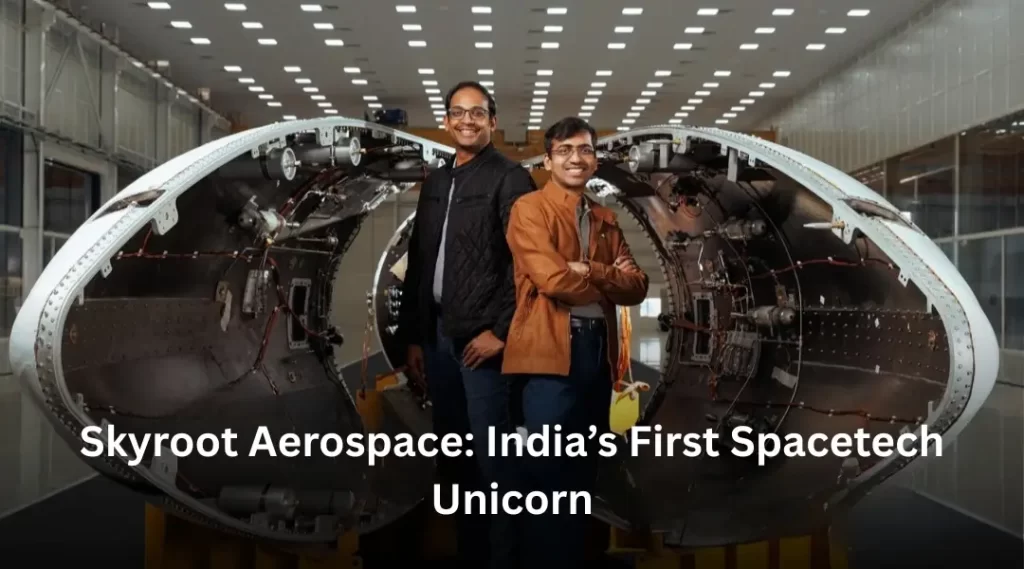
On May 7, 2026, the Indian startup ecosystem hit an astronomical milestone as Skyroot Aerospace officially claimed the coveted position of India’s First Spacetech Unicorn. The Hyderabad-based rocket maker’s valuation soared to $1.1 billion (around ₹500 crore) after a new round of funding of $60 million, a milestone for the country’s private space industry.
The landmark funding round was co-led by existing backers Sherpalo Ventures and Singapore’s sovereign wealth fund GIC. The cap table also expanded to include global heavyweights such as BlackRock, who came on board along with the founders of Greenko Group, Arkam Ventures, Playbook Partners, and the Shanghvi Family Office.
The “unicorn” tag is more than a financial metric; it’s validation of the commercial viability of India’s first spacetech success story as Skyroot Aerospace grows from disruptive startup to global contender.
The Strategic Design – Investment in Vikram Fleet
The $60 million investment comes at an important time as the company prepares for the first orbital flight of Vikram-1. Skyroot’s sub-orbital Prarambh mission in 2022 created history, but the real commercial frontier is the shift to orbital-class launches.
1. Scaling Commercial Operations of Vikram-1
The fresh capital will be used to establish a “high-cadence” launch schedule for Vikram-1. It is a three-stage solid-fuelled rocket with a payload capacity of up to 480 kg to low-earth orbit (LEO). Skyroot aims to reduce the global backlog of small-satellite launch capacity by streamlining manufacturing and launch operations.
2. Development of Vikram-2
A major chunk of the funding will speed up the R&D of Vikram-2. This next-generation vehicle will have a 1-tonne class payload capacity, with an advanced cryogenic upper stage. This will allow Skyroot to service a wider range of missions from complex satellite constellations to interplanetary research payloads.
3. Infrastructure and Workforce Expansion
Hyderabad Skyroot is scaling up its manufacturing footprint in Hyderabad to support multiple orbital missions. This includes the latest 3D printing facilities for engine parts and carbon-composite structures, keeping the firm’s competitive unit-economics advantage over US and European competitors.
The Global Context: Why Are Investors Betting on Skyroot?
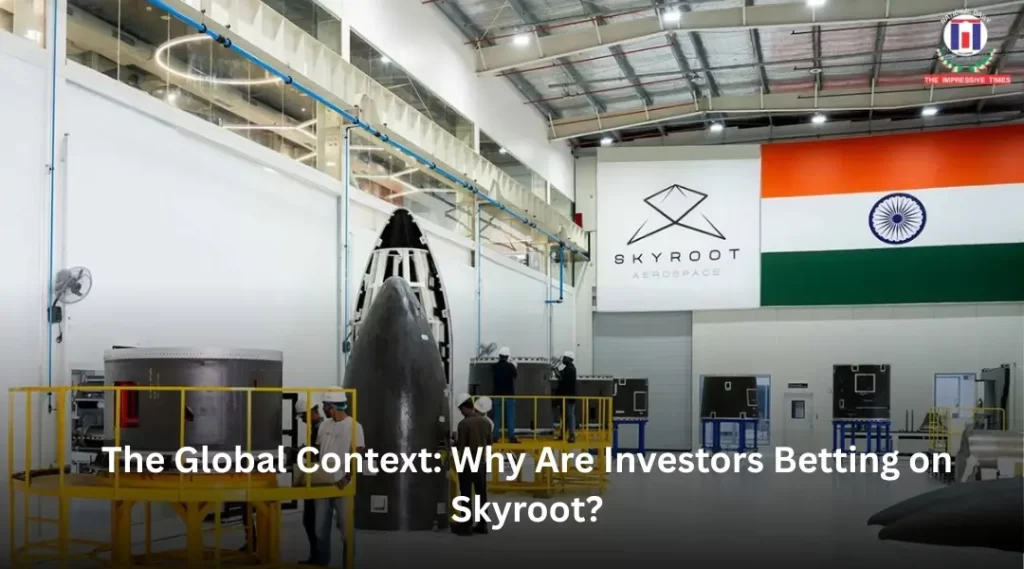
BlackRock’s entry and continued support from GIC show increasing confidence in the Indian space and AI-driven regulatory landscape. Since the reforms of 2020 that opened the Indian space sector to private participation, India has gone from being a state-led player to a burgeoning commercial and AI-enabled innovation hub.
- Cost-Effectiveness: Skyroot benefits from India’s engineering depth and lower operational costs, which results in far more affordable launch solutions compared to incumbent providers.
- The “Agent” of Change: Skyroot welcomes Ram Shriram, former Google executive and Sherpalo Ventures founder, to its board to bring Silicon Valley’s strategic playbook for scaling foundational infrastructure.
- Market Need: As the markets for the “Internet of Things” (IoT) and satellite broadband grow, demand is at an all-time high for dedicated, on-demand small-satellite launches.
Vikram-1 Maiden Flight: The Road to the Launchpad
All eyes are now on Satish Dhawan Space Centre (SDSC) SHAR in Sriharikota. The launch window is planned for June 2026 and the flight hardware for Vikram-1 has already been shipped. The successful orbital mission would be a first for a private Indian entity and would further cement Skyroot’s position as a global leader in the small-satellite launch market.
Frequently Asked Questions (FAQs)
1. Who is India’s first spacetech unicorn?
Skyroot Aerospace became India’s first spacetech unicorn on May 7, 2026, with a valuation of $1.1 billion following its latest funding round of $60 million.
2. Who are the investors in Skyroot Aerospace’s latest $60 million round?
The round was co-led by GIC (Singapore’s sovereign wealth fund) and Sherpalo Ventures. Other marquee investors include BlackRock, Playbook Partners and Shanghvi Family Office, along with existing backers and the founders of Greenko Group.
3. Why are the first spacetech milestones of India significant?
The success of India’s first spacetech success story, Skyroot Aerospace, is a testament to the effectiveness of the 2020 space sector reforms. It tells global investors that India is a credible, cost-competitive location to build high-end orbital infrastructure.
4. What is the Vikram-1 orbital launch date?
The first orbital flight of the Vikram-1 rocket is now targeted for June 2026. At the Satish Dhawan Space Centre, final preparations for the launch vehicle are underway.
5. What will the new funding be used for?
The $60 million will be used to increase manufacturing capabilities and support development of the larger Vikram-2 launch vehicle, as well as boost launch frequency for Vikram-1.
6. Who is the founder of Skyroot Aerospace?
Skyroot was founded in 2018 by Pawan Kumar Chandana and Naga Bharath Daka, former ISRO scientists who set out to democratise and make space accessible through affordable launch solutions.