

The Rise of the AI Marketing Agent: What Your Team Needs to Knowfor 2026
- Blog Artificial Intelligence Industry New Trending News
- Entrepreneurs Story
- November 28, 2025
- 406
- 9 minutes read
Introduction
By 2026, AI marketing agents will basically shift the role of marketing professionals from a strategic executor to a creative director and strategic orchestrator. The teams will be required to incorporate these autonomous agents to manage hyper-personalisation, campaign optimisation and data analysis, by emphasising human proficiency on authentic brand storytelling, ethics and strategy.
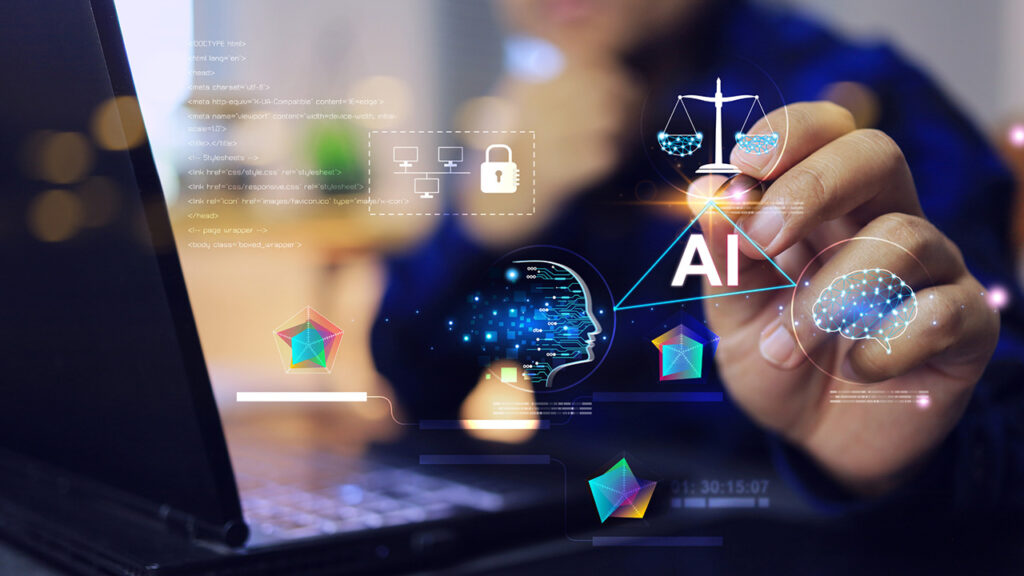
What are AI agents for marketing?
The AI marketing agents are specialised and advanced software systems which automate as well as operate a number of marketing tasks. They execute by utilising a mixture of algorithms, predefined rules and data, as well as possess the capability to learn and adapt over time.
Different from traditional marketing AI tools, which fundamentally generate content or evaluate data, agentic AI emphasises making significant decisions and taking appropriate actions. They shift beyond facilitating insights and actively engaging in the marketing procedure to attain the particular objectives, like
- Automating multi-step cross-departmental and internal AI workflows automation.
- Optimising and managing campaign performance in real-time.
- Facilitating hyper-personalised product and content recommendations.
- Communicating with consumers via superior conversational interfaces.
Shift into team roles and structure
The AI agents are shifting from simple tools towards autonomous digital teammates which could manage multi-step and complex procedures with minimal human oversight. The AI automation in marketing results in the automation of recurring tasks and the evolution of specialised and novel human roles.
- AI marketing strategists create and adapt AI-enhanced systems by emphasising aligning technology with the overarching business objectives.
- Consumer Experience Orchestrators create inclusive consumer journeys by utilising AI for behavioural evaluation while applying human understanding to build trustworthiness.
- Strategic content directors uphold brand steadiness and imaginative vision by leveraging AI for scalable content production, but making sure a human soul check for legitimacy.
- Compliance and ethics officers will play an essential role in navigating data privacy laws (such as CCPA and GDPR) and ensuring that the utilisation of AI is impartial and transparent.
- AI Integration officers or architects will be required to incorporate numerous AI platforms and tools, ensuring seamless process orchestration and data flow throughout the firm.
Necessary skills for 2026 and how to implement AI marketing agents?
Achievement within an AI-driven landscape needs a hybrid skills set which blends technology proficiency with exceptional human abilities.
- AI Prompt engineering and fluency: Marketers are required to analyse the ways through which AI agents function, ways to set their constraints and goals and to develop precise prompts to attain desired outputs.
- Data interpretation and literacy: The capability to convert predictive analytics and AI-generated data into actionable business tactics will be regarded as a key proficiency.
- Strategic thinking: At execution, AI excels, but humans should define the vision, establish strategic direction and predict market shifts.
- Storytelling and creativity: The capability to develop a robust brand narrative, emotional intelligence and human creativity will become a major differentiator since AI manages fundamental content generation.
- Bias detection and ethical judgment: Marketers should be capable of recognising algorithm bias and also ensure the transparent and accountable utilisation of AI to comply with regulations and develop consumer trust.
- Cross-functional collaboration: AI agents break down customary departmental silos by making the capability to work across IT teams, product, marketing and sales necessary.
Core strategic shifts
- From reactive to analytical marketing: AI allows teams to predict market trends and consumer requirements before they fully evolve, enabling the adjustments of practical campaigns along with personalised involvement.
- From mass marketing to hyper-personalisation at scale: AI agents could serve individual experiences to several users, consequently, by making generic messaging outdated.
- From keyword SEO to Generative Engine Optimisation (GEO): Content will need to be organised, machine-readable and of high standard to be discovered as well as cited by personal shopping agents, generative AI for marketing and AI-powered search engines.
- From manual reporting to constant intelligence: AI facilitates automated reports and real-time performance insights by freeing up analysts to emphasise the high-level tactical understanding.

Best AI marketing tools 2026
Marketers will leverage incorporated platforms which unify content operations and data.
- Content creation: Tools such as Writesonic, Jasper and ChatGPT help in drafting social media posts, ad copy and blogs.
- Visuals and design: Platforms like Adobe Firefly and Canva AI assist in developing active ad variations along with visual assets.
- CRM and analytics: Incorporated systems such as HubSpot AI and Salesforce Einstein serve lead scoring and predictive insights.
- Marketing Workflow automation tools: Tools such as n8n and Zapier link numerous apps to mechanise recurring marketing tasks flawlessly.
Actionable roadmaps for the team
In order to prepare the team for 2026, the brands must audit present approaches to recognise where the AI could add value, beginning with low-risk pilot projects. Furthermore, the focus must be upon investing in constant learning of the team, by emphasising AI literacy, strategic thinking and data skills. There is also a need to embrace experimentation by measuring the outcomes from AI initiatives and adapting approaches on the basis of the performance data.
Future of marketing is agentic
AI agents determine a significant emergence, shifting the marketing from a data-analysis and reactive function towards an automated and practical execution engine. By bridging consumer data with the authority to take actions, these systems allow actual efficiency along with personalisation at a rapid scale, by surpassing past limitations on human ability which showcases
AI agent vs. human marketer
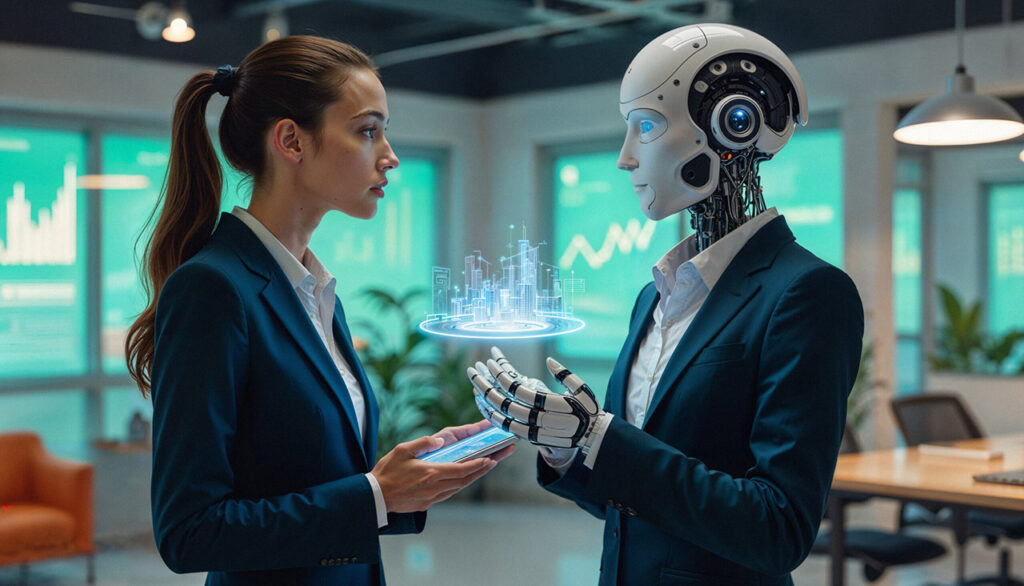
For the future of marketing teams, marketing AI strategy 2026 states that this technology moves the regular emphasis from routine content manufacturing along with segmentation mechanisms towards a high-level approach along with consumer experience design.
Moreover, effective adoption needs to set clear and concise guardrails as well as facilitate agents with a strong basis of organisation-specific knowledge. Along with this, the Salesforce Marketing Cloud and training AI marketing models serves the data connectivity as well as the agentic layer required to organize these AI agents effectively, automating hyper-personalisation along with complex journeys throughout channels.
Therefore, accepting AI agents is determined to be the path towards attaining more consistent AI workflow automation, efficient consumer involvement, and standard personalisation in the future.