

Peyush Bansal Success Story: The Entrepreneur Who Provided a “Vision” to India
- Success stories
- Entrepreneurs Story
- April 24, 2026
- 416
- 9 minutes read
Introduction
In the very competitive world of Indian e-commerce, Peyush Bansal is a shining example of purpose-driven entrepreneurship. He didn’t just start a retail brand as the co-founder and CEO of Lenskart; he also solved a major health and accessibility issue for millions of people. Bansal’s journey from a comfortable job at Microsoft in the US to the rough basements of Delhi is a masterclass in customer-focused innovation, vertical integration, and never giving up.
Peyush is a well-known “Shark” on Shark Tank India. He is known for investing with his heart. He often supports founders who use technology to solve real-world social problems, especially those that affect communities that are underserved or have special needs. He has a simple philosophy: solving a big problem will make you money.
Early Life: The Global Engineer with a Heart for Home
Peyush was born on April 26, 1985, in New Delhi. He grew up in a middle-class family that valued learning and being curious about the world. He finished school at Don Bosco School in New Delhi, where he was always good at schoolwork. He went to McGill University in Montreal, Canada, to get a Bachelor’s degree in Electrical Engineering because he wanted to push the limits of technology.
He started his career at the top of the tech world as a Program Manager at Microsoft in Redmond, Washington. He worked on the MS Office project that Bill Gates was in charge of. But the corporate ladder felt like a cage made of gold. He made the radical choice to quit his well-paying job and go back to India in 2007 because he had a “startup vision” and wanted to make a real difference in his home country.
Valyoo Technologies: The Pre-Lenskart Hustle
When he got back, Peyush was always trying new things. He didn’t become successful right away; he had to work hard and make mistakes. He started SearchMyCampus in 2007 as a place for college students to find housing, books, and internships. While doing this, he saw a huge hole in the market for glasses.
He officially started Valyoo Technologies in 2008. Under this company, he ran a number of specialized businesses to see how Indian e-commerce would work:
SearchMyCampus is the main classifieds site for students.
Flyrr: His first attempt at making glasses, which he started in the US in 2009. He thought that if the trust gap could be closed, eyewear could be sold online because Flyrr did so well in the US.
Watchkart, Bagskart, and Jewelskart are niche e-commerce sites that started in 2011 to try out vertical integration.
These first businesses taught him an important lesson: for a brand to do well in India, it needs to control the whole supply chain and find a way to connect digital ease with physical trust. In the end, he closed the other “karts” so that he could focus all of his energy on Lenskart’s vision.
The Birth of Lenskart: Changing an Industry That Wasn't Organized
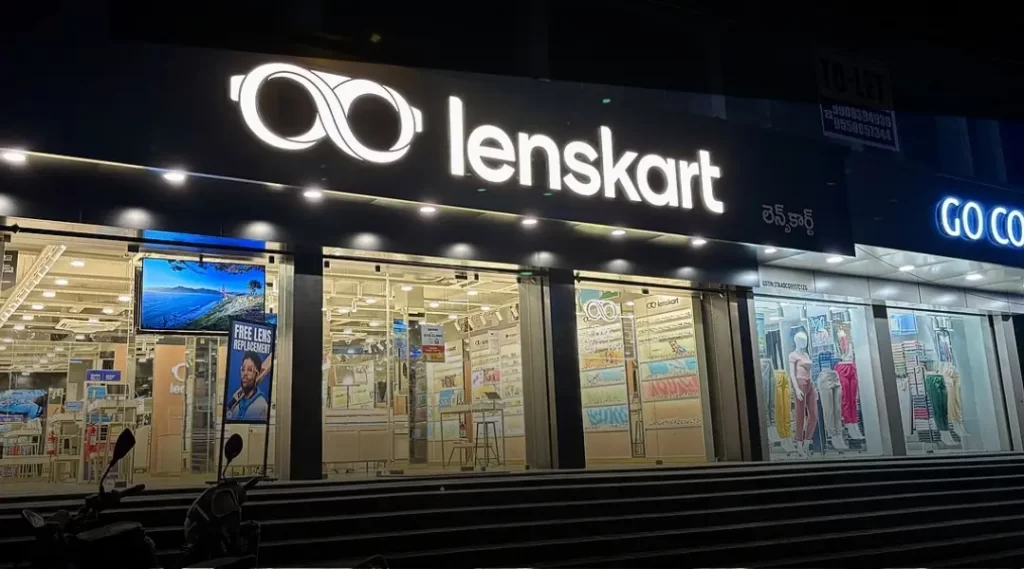
Peyush and Amit Chaudhary, who co-founded Lenskart, started the company in November 2010. In 2011, Sumeet Kapahi joined them. The Indian eyewear market was 95% unorganized at the time. It was a long and boring process to buy glasses because you had to go to several local opticians, where there weren’t many options and the quality was often bad.
The Strategy That Breaks Things
Lenskart broke the old model by becoming a vertically integrated powerhouse. They were in charge of everything, from designing and making the product to delivering it to the store.
Robotic Accuracy: Lenskart built a state-of-the-art facility in Bhiwadi, Rajasthan, and a huge factory in Manesar. They are one of the few global brands that use German robotic technology to make glasses with an accuracy of up to three decimal places, which almost completely removes human error.
Omnichannel Model: Lenskart switched to a “Phygital” model after learning that 90% of Indians were afraid to buy prescription glasses online. As of 2026, the brand has more than 2,000 stores in India, Singapore, and the Middle East, where customers can “touch and feel” the frames.
Home Eye Check-Up: Lenskart changed the industry by offering a service where certified optometrists go to customers’ homes with special equipment and do more than 15,000 eye tests every day.
By 2026, Lenskart will have grown into a Decacorn with a value of about $5.6 billion. It has grown its presence through smart purchases, like buying a majority stake in the Japanese eyewear company Owndays, which has made Lenskart a major player in the Asian market.
The Shark Tank India Journey: A Shark with a Vision
Peyush Bansal has been on Shark Tank India since Season 1 and has been a regular through Season 5 (2026). People call him the “founder’s shark” and respect him a lot. He is a calm person with a lot of technical knowledge and a tendency to make “purpose-driven” pitches.
Philosophy and Style of Investing
Peyush often looks for the “soul” of a business. Peyush doesn’t just look at EBITDA and margins like other sharks do. Instead, he asks, “What is the core problem you are solving for humanity?” His “tech-for-good” investments are what he’s most well-known for.
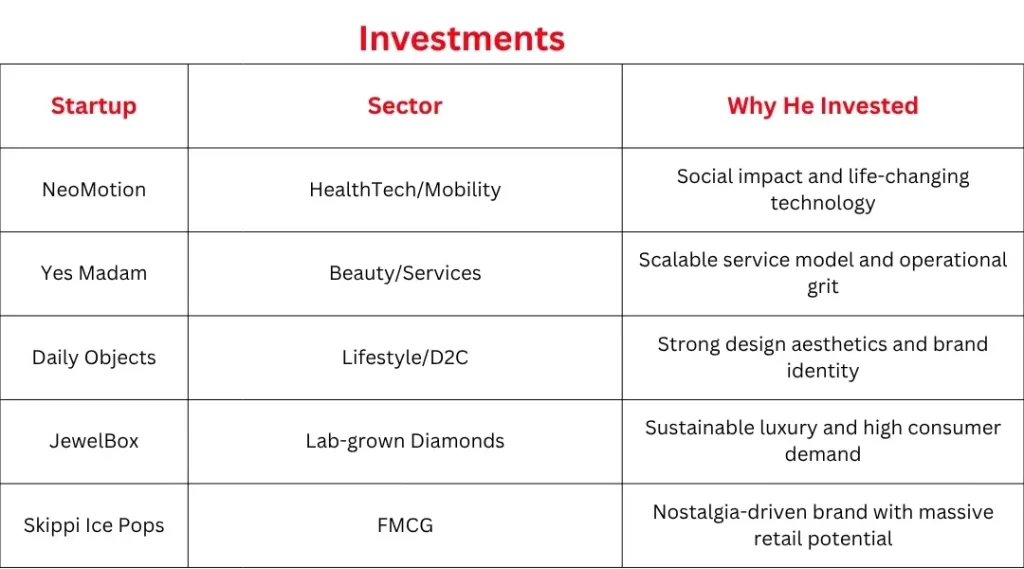
Some of the most important investments are:
NeoMotion is a startup that makes motorized wheelchairs for people with disabilities. People said that Peyush’s investment here was one of the most moving and important moments in the history of the show.
Isak Fragrances is a luxury perfume brand from Lucknow that uses old Indian “Attar” methods.
Insurance Samadhan is a website that helps regular people deal with complicated insurance complaints and claims.
Lenskart Vision Fund he made this fund to put money into early-stage startups that fit in with the eyewear, primary healthcare, and health-tech ecosystems.
Milestone in 2026: The IPO and Sustainability
Lenskart is no longer just a “startup” in 2026; it is now a global company. Lenskart filed its Red Herring Prospectus (RHP) for a huge ₹2,150 crore IPO in October 2025. There were more investors than shares available in the public offering, which shows that they believe the company can go from being a loss-making disruptor to a profitable industry leader.
Financial Health: Lenskart made ₹6,652 crore in sales in FY25 and had a big net profit, showing that the omnichannel model could be profitable at a larger scale.
In early 2026, Peyush was at the center of a viral discussion about Lenskart’s grooming policy. He personally stepped in to make it clear that the company supports a diverse workplace, which showed his commitment to a modern, culturally sensitive corporate India.
Sustainability: The Bhiwadi facility is now a Zero Liquid Discharge plant with a 2,300 KW solar rooftop. This makes the brand meet global ESG (Environmental, Social, and Governance) standards.
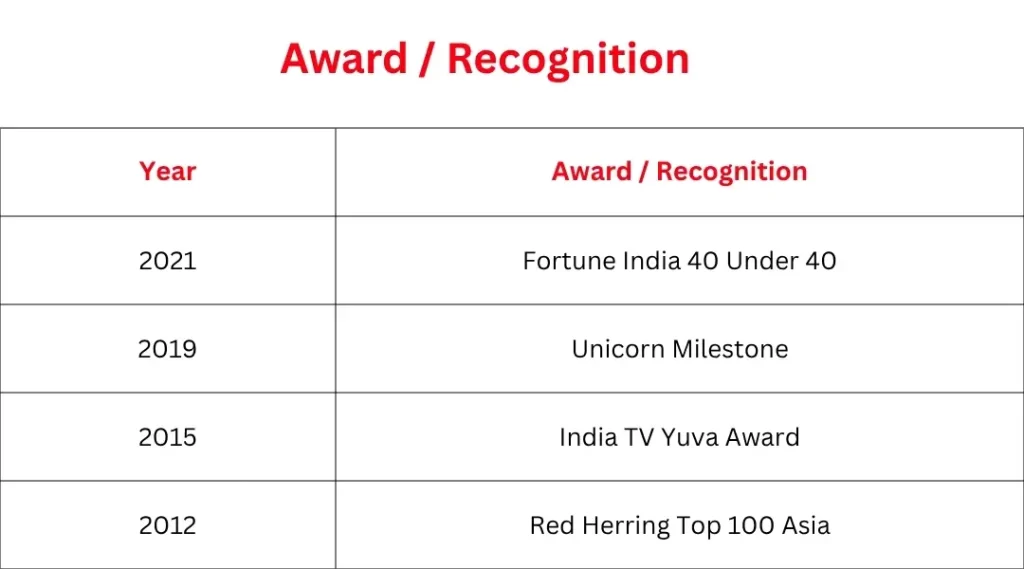
Awards & Recognition
Key Investments -