


Bengaluru Gets India’s First 8-Inch Quantum Foundry From QpiAI
- Blog Artificial Intelligence Industry New Technology Trending News
- Entrepreneurs Story
- August 19, 2026
- 700
- 12 minutes read
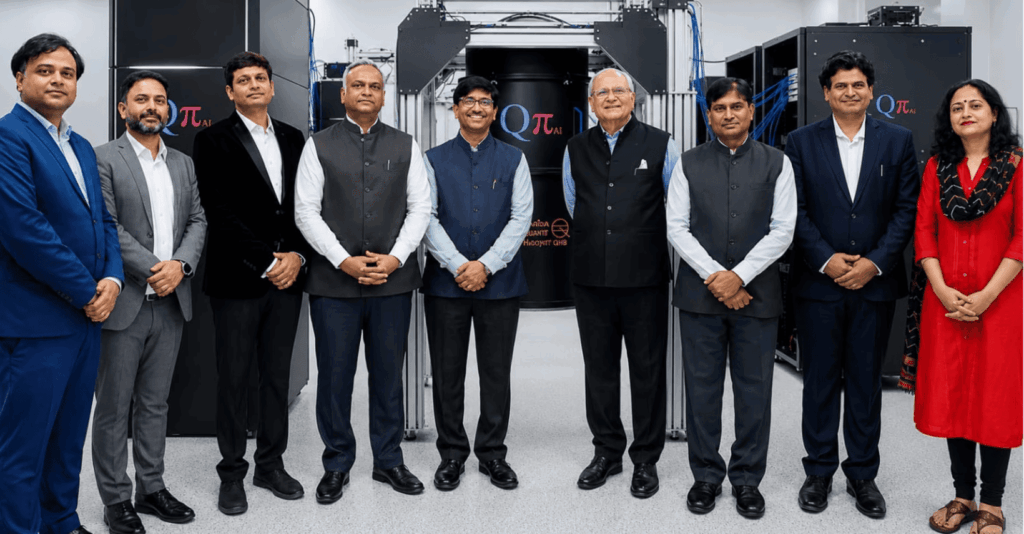
Quantum computing is edging out of the physics lab and into the factory, and India just staked its claim in that shift. In Jakkur, on the outskirts of Bengaluru, quantum computing startup QpiAI has cut the ribbon on an 8-inch quantum foundry that the company describes as the first of its kind in the country a facility built to manufacture quantum processors from raw wafer to finished, cryogenically packaged chip.
Until now, Indian quantum and deep-tech researchers leaned heavily on fabrication capacity overseas, which meant long lead times and exposure to geopolitical risk. Bringing that capability in-house changes the equation. The new facility gives domestic teams a secure, local supply chain and a platform to scale, and it marks a deliberate step toward hardware self-reliance in an industry where very few countries can currently build their own quantum chips end to end.
The Dawn of Indigenous Quantum Hardware
Karnataka’s IT Minister Priyank Kharge joined QpiAI founder and CEO Nagendra Nagaraja at the ribbon-cutting for what the company is calling Asia’s largest facility of its kind: a 70,000-square-foot research and development center. This launch represents the completion of Phase 2 of the site, which brings fully operational Class 100 and Class 1,000 cleanrooms online. At this stage, QpiAI can fabricate flip-chip superconducting processors carrying up to 128 physical qubits.
The point of building a foundry rather than just buying chips abroad is speed. With fabrication, testing, and iteration all happening under one roof, engineers can run design cycles back-to-back instead of shipping wafers overseas and waiting weeks for results.
Nagaraja has said the company intends to keep the entire manufacturing chain in-house lithography, etching, patterning, assembly, and packaging because, in his words, conventional semiconductor foundries “are not equipped” to handle the specialised devices quantum computing requires.
The Four Chips Built So Far
QpiAI has already built four different quantum chips at this facility. QVidya has 8 qubits, Indus has 25, and Kaveri has 64; all three use a well-established chip design called transmon qubits, which most of the industry relies on because they’re easier to build and control. The fourth chip, Yukti, takes a different approach with 9 qubits built on a newer design called fluxonium.
The difference matters because fluxonium chips, while harder to manufacture, can hold information for longer before errors creep in an important step toward building more reliable quantum computers down the line. Every chip also has to be cooled to temperatures colder than outer space to work at all, which is why the facility puts as much effort into packaging and cooling as it does into building the chips themselves.
Strategic Impact and the Road to 10,000 Qubits
QpiAI’s roadmap doesn’t stop at 128 qubits. Phase 3 of the Jakkur site, targeted for completion in 2027, is meant to expand cleanroom capacity enough to fabricate a single QPU carrying up to 10,000 physical qubits. If the company hits that mark, it would put commercial-grade quantum computing within reach of a much wider set of enterprises pharmaceutical companies and financial institutions among them rather than a handful of well-funded labs.
The company has put roughly $20–25 million into the foundry so far, with another $10–15 million earmarked for the Phase 3 build-out. The current 70,000-square-foot center is described as a first step; the longer-term plan is a 10-acre campus that would eventually house what QpiAI calls “Quantum Supremacy Centres” hybrid data infrastructure pairing fault-tolerant QPUs with large AI compute clusters.
Accelerating the National Quantum Mission
Self-reliance in deep tech has become a policy priority as much as a business one, and this launch feeds directly into that goal. QpiAI is one of eight startups selected under India’s National Quantum Mission, which is working toward indigenous 50-to-1,000-qubit systems this decade. A working 8-inch quantum foundry gives that mission something it didn’t have before: physical, in-country infrastructure to turn the policy target into hardware.
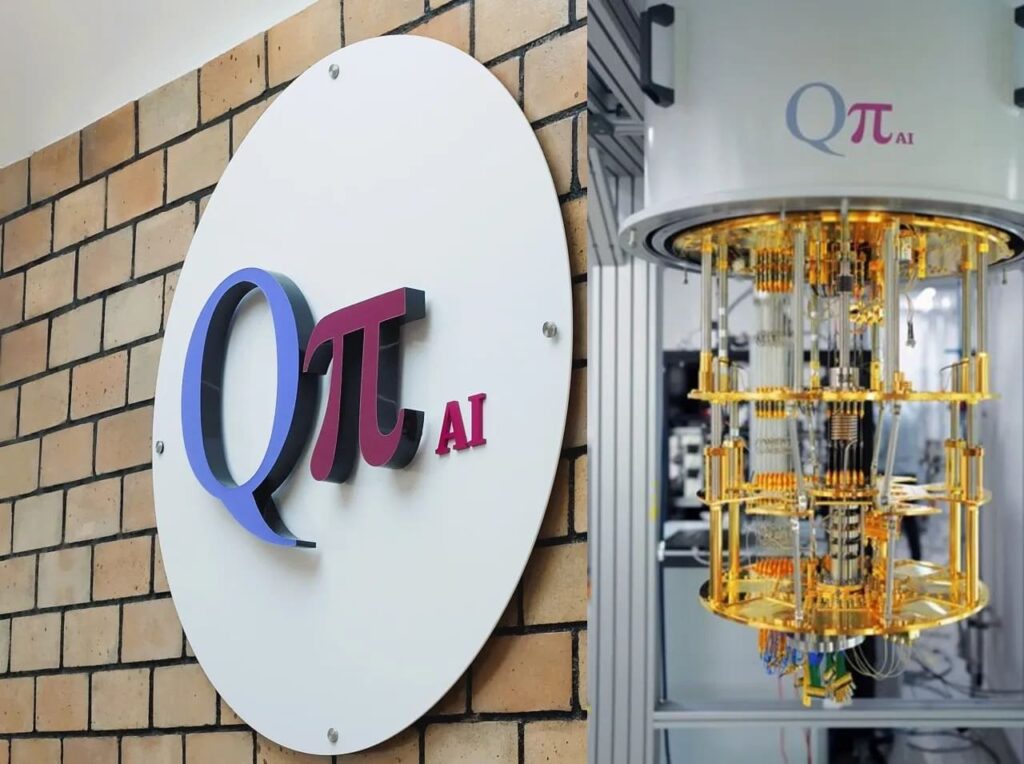
The ripple effects extend beyond QpiAI’s own roadmap. A domestic foundry creates demand for specialised engineers, materials scientists, and cryogenics experts, and it gives Indian quantum researchers a production-grade facility to test ideas against rather than relying entirely on partnerships abroad. Whether or not QpiAI hits every milestone on schedule, the facility itself is a marker of how far India’s quantum hardware ambitions have moved from proposal to concrete infrastructure.
Frequently Asked Questions (FAQs)
1. What exactly is a commercial quantum foundry?
It’s a specialised manufacturing facility built around advanced cleanrooms and precision fabrication tools dedicated to producing and testing quantum processing units (QPUs). Unlike a standard silicon chip fab, it also handles processes unique to quantum hardware, such as superconducting qubit fabrication, Josephson-junction patterning, and cryogenic packaging for operation near absolute zero.
2. Why does QpiAI's Bengaluru facility matter for the global supply chain?
It gives India end-to-end quantum chip manufacturing at home for the first time. That reduces dependence on overseas fabs, shortens development cycles, and insulates Indian quantum research and industry from export restrictions or supply disruptions elsewhere in the world.
3. How does this change quantum processing unit manufacturing in India?
Before this facility, Indian teams had to send designs abroad for fabrication. Now the full process lithography, etching, 3D stacking, and packaging happens domestically, which means faster prototyping and iteration on new qubit designs without waiting on foreign partners.
4. What are QpiAI's future production targets for the foundry?
Phase 2, now complete, supports processors with up to 128 qubits. Phase 3, targeted for 2027, aims to scale that to a single QPU holding as many as 10,000 physical qubits.
5. What technologies is QpiAI developing at the facility?
Engineers are fabricating processors on both transmon and fluxonium superconducting qubits. Four chips are already built: QVidya, Indus, Kaveri, and Yukti, and the roadmap includes pairing future QPUs with classical AI hardware inside planned Quantum Supremacy Centres.