


Milkvilla Expands Hyperlocal Operations to Speed Up Farm-to-Door Delivery
- Blog Industry New Startup Technology Trending News
- Entrepreneurs Story
- August 19, 2026
- 713
- 13 minutes read
Most of us don’t think twice about the milk in our fridge, but the carton on a supermarket shelf can be seven to ten days old by the time it reaches a customer. That gap is exactly what a Bengaluru-based dairy startup set out to close. As Milkvilla expands hyperlocal operations across South and North India, the company is rewriting how fresh milk moves from village farms to city kitchens. Founded in 2021 by brothers Mannu Jee and Aman Jee, the Milkvilla dairy startup skips the long chain of processing plants, distributors, and retail shelves that most packaged milk passes through. Instead, it runs milk from a nearby farm to a customer’s door in about 12 hours, using a supply chain the company has since patented.
Why India’s Old Dairy Supply Chain Needed Fixing
Mannu Jee grew up in Rampur village in Bihar’s Muzaffarpur district, watching his father rear cattle and struggle with the same problem every small dairy farmer knows: milk spoils fast, and the traditional system does little to protect either its quality or the farmer’s earnings. By the time milk travels through processing, packaging, and retail, it’s often a week to ten days old — what Mannu calls “engineered milk,” loaded with additives just to survive the journey.
His path to a fix came from an unlikely place. Mannu later joined the merchant navy and worked with a Hong Kong-based shipping company, where he watched perishables like meat and fish move across the globe without losing freshness. That experience became the seed for Milkvilla’s own logistics model. Today, the company has built its business around cutting out middlemen entirely, favouring a direct Milkvilla farm to door approach that keeps milk as close to its natural state as possible.
Inside the 12-Hour Collection-to-Delivery Model
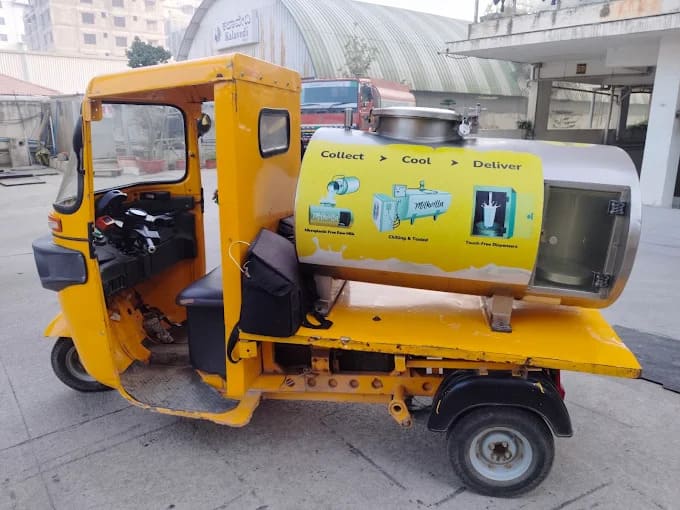
The system itself is fairly straightforward, even if it took real engineering to pull off. Specially fitted milk collection vehicles, carrying their own cooling and testing equipment, pull up at farmers’ doorsteps each morning and evening. The milk is turbo-cooled to four degrees Celsius almost immediately, which stretches its shelf life to 24 hours without adding a single preservative.
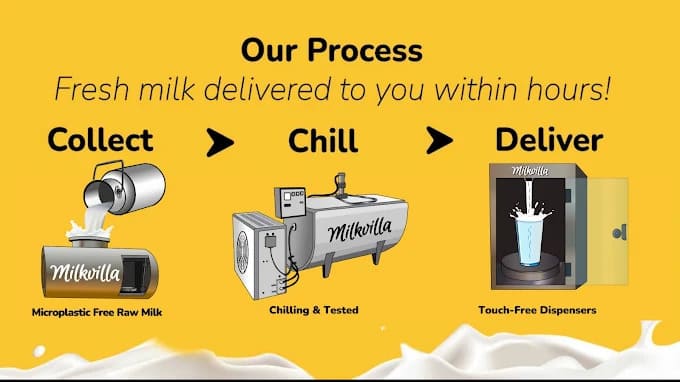
From there, it’s a short trip to a delivery hub, where the milk goes through quality checks before being loaded into refrigerated vans for the final leg. This is the core of the Milkvilla hyperlocal delivery pitch: the entire run, from farm to fridge, takes about 12 hours across two collection-and-delivery cycles a day not an exact clock, but close enough that freshness is rarely in question.
Farmers Get a Bigger Share of the Pie
Milkvilla now runs out of two hubs its founding base in Muzaffarpur and its headquarters in Bengaluru, where milk is sourced from dairy farmers roughly 50 km away in the Ramanagara district. The company works with a network of around 350 dairy farmers, and by cutting out the usual layers of middlemen, it’s able to pass on 60 to 70 percent of revenue directly to them. That’s a meaningfully larger cut than most farmers see through conventional supply chains, and it’s central to how the ongoing Milkvilla expansion is being framed not just as a growth story for the company, but as an income story for the farmers behind it.
Betting on A2 Milk and a Broader Product Line
Milk protein comes in two main forms alpha-casein and beta-casein and Milkvilla has built much of its brand around the latter. Indigenous Indian cattle breeds tend to produce beta-casein-rich milk, which is widely considered easier to digest than the alpha-casein milk from breeds like Switzerland’s Highland cattle. That’s the science behind Milkvilla A2 raw milk, the company’s flagship product and the anchor of its pitch to health-conscious buyers.
The Milkvilla dairy startup hasn’t stopped at raw milk, though. Through its prepaid subscription app, customers can now order ghee, paneer, and peda alongside their regular Milkvilla A2 raw milk delivery, with all of it moving through the same 12-hour logistics chain.
The Money Side: Bootstrapped, Profitable, and Raising a Seed Round
Mannu and Aman put in Rs 1.5 crore of their own money to get Milkvilla off the ground, and the business has been profitable for the past four months, with a monthly recurring revenue of around Rs 1 crore. The leadership team has since grown to include CFO and Chief Growth Officer Piyush Chachondhia and co-founder Prashant Gyan alongside the two brothers.
With that traction, and its patented Milkvilla hyperlocal delivery model proving out, the company is preparing to raise a Rs 15 crore seed round over the next six months, money it plans to put toward opening ten new delivery hubs across Bengaluru. From there, the plan is to expand into other Tier I cities and eventually build out a franchise model the next stage of the Milkvilla expansion story.
Conclusion
Milkvilla’s bet is a simple one: that shorter supply chains and honest farmer economics can beat the convenience of long-life packaged milk. It’s early days for the seed round and the ten-hub Bengaluru rollout, but the underlying model fast collection, real cold-chain discipline, and a direct line from farm to door gives a reasonably clear picture of why Milkvilla expands hyperlocal operations rather than simply scaling up a traditional distribution network. Whether that translates into a nationwide franchise is the next test.
Frequently Asked Questions (FAQs)
1. How does the consumer benefit when Milkvilla expands hyperlocal operations?
Shorter transit times mean less handling and no need for shelf-life-extending chemicals. Customers get milk that’s roughly 12 hours old rather than a week or more, without the added processing typical of long supply chains.
2. What is the roadmap for the upcoming Milkvilla expansion?
Milkvilla is raising a Rs 15 crore seed round to fund ten new delivery hubs across Bengaluru over the next six months, with plans to later expand into other Tier I cities through a franchise model.
3. How does the Milkvilla hyperlocal delivery system actually work?
Collection vehicles fitted with cooling and testing equipment pick up milk at farmers’ doorsteps, cool it to four degrees Celsius on the spot, and route it through quality checks before refrigerated vans complete delivery the whole cycle takes about 12 hours.
4. Does the Milkvilla farm to door model benefit farmers?
Yes. By removing traditional middlemen, the company passes 60 to 70 percent of revenue to its roughly 350 partner farmers, a meaningfully bigger share than most conventional dairy supply chains offer.
5. What’s the health case for Milkvilla A2 raw milk?
It comes from indigenous Indian cattle breeds that naturally produce beta-casein-rich milk, which is generally considered easier to digest than the alpha-casein milk common in breeds like Swiss Highland cattle.
6. What else does the Milkvilla dairy startup sell besides milk?
Ghee, paneer, and peda are all available through the same subscription app and follow the same 12-hour cold chain used for raw milk.