


Peeko Babycare Startup Raises $7 Million in Series A Funding to Scale 60-Minute Delivery
- Blog Funding Industry New Startup Trending News
- Entrepreneurs Story News
- August 20, 2026
- 712
- 17 minutes read
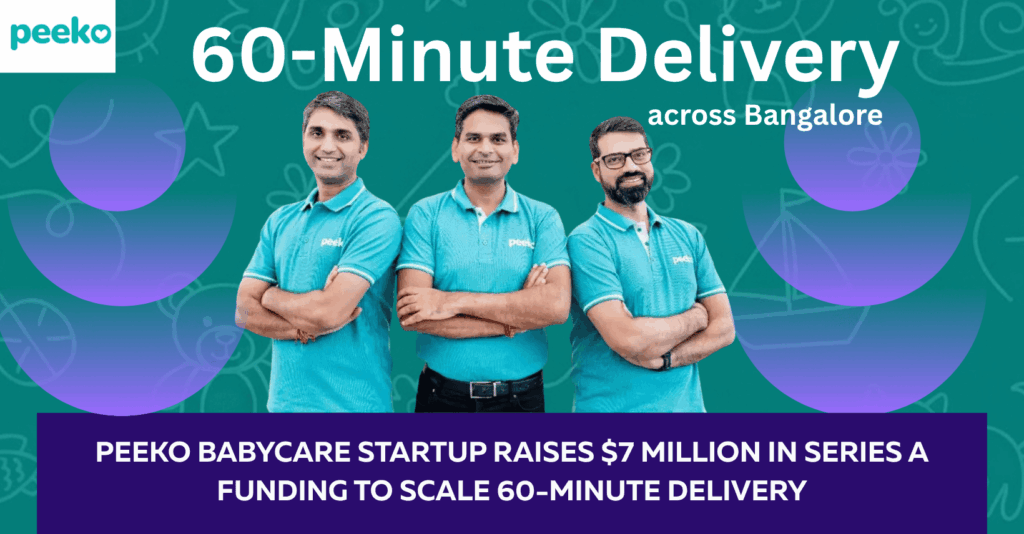
Indian parents want babycare essentials fast, not in two days, and that shift is reshaping how the category is built. Bengaluru-based Peeko, a vertical quick-commerce platform focused entirely on baby and kids’ care, has raised over $7 million (₹67.4 crore) in Series A funding, led by Chiratae Ventures with continued backing from Stellaris Venture Partners and a group of angel investors. This Peeko Series A funding round is the startup’s second major raise, taking its total capital to roughly $10.2 million since it came out of stealth in 2025.
For time-starved parents, convenience isn’t a nice-to-have it’s the entire pitch. Peeko is betting that a tightly curated, fast-delivery model can outperform both traditional retail and the broad horizontal quick-commerce apps that treat babycare as a side aisle rather than the main event.
Inside the Peeko Series A Funding Round
Chiratae Ventures led the round, with Stellaris Venture Partners an existing investor returning, alongside angel investors including MakeMyTrip cofounder Deep Kalra. This fresh Peeko startup funding builds on the $3.2 million seed round the company raised in August 2025, also led by Stellaris.
Founded in 2025 by Chetan Sharma and Abhijit Gairola, both former Leap Finance executives, along with Vivek Khetan, a former OYO executive, Peeko has moved from a single dark store to a multi-location operation in under two years.
The new capital is earmarked for three priorities:
- Platform technology: Building what the founders call a “parenting partner” ecosystem that combines content, product discovery, and subscriptions, not just a storefront.
- Micro-fulfillment infrastructure: Adding dark stores to shrink delivery radiuses further.
- Supply chain and assortment: Deepening partnerships with domestic and international babycare brands.
The 60-Minute Delivery Promise
In babycare, a delayed delivery isn’t just inconvenient. Running out of formula or diapers late at night is a genuine emergency, and next-day shipping doesn’t solve it. That’s the gap Peeko is built around.
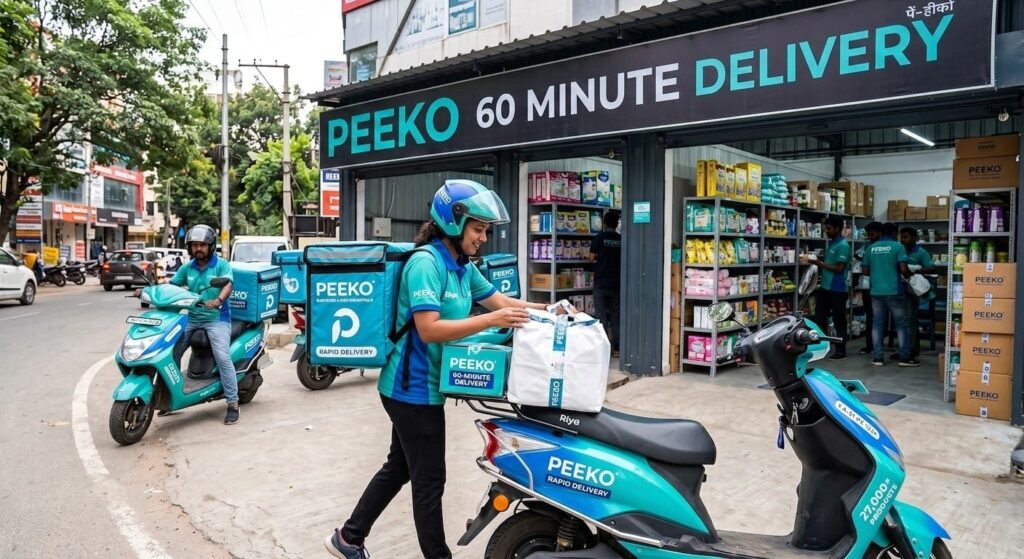
Its 60-minute delivery model runs on dark stores placed in high-density residential clusters across Bengaluru, stocked specifically for babycare rather than general groceries. Alongside speed, Peeko has added a few features built for new parents:
- Try-and-buy: parents can test sizes and gear before paying for them.
- Instant returns: refunds are processed at the doorstep, on the spot.
- Temperature-controlled logistics: for organic baby food, probiotics, and formulas that don’t travel well in a standard delivery bag.
Catalog Growth and Traction
Since launch, Peeko’s catalog has grown from around 6,000 SKUs to between 27,000 and 30,000 SKUs, spanning four categories: consumables and hygiene, apparel and accessories, toys and developmental aids, and baby gear. The company says revenue has roughly doubled every quarter over the past six months, and more than 100,000 parents have shopped on the platform since launch. Average order value sits at around ₹1,000, with apparel, toys, and gear the higher-margin categories accounting for a meaningful share of sales.
Where Peeko Fits in Quick Commerce
Horizontal players like Blinkit, Zepto, and Instamart dominate everyday grocery and snack delivery, but babycare is a category where depth and curation matter more than sheer catalog size. Peeko’s babycare assortment is reportedly several times deeper than what a typical horizontal dark store carries in the category, and that specialization is the core bet: better selection and trust translate into larger baskets and repeat purchases from parents who would rather not gamble on unfamiliar products.
Whether that bet pays off will come down to execution. Quick commerce is capital-intensive, and Peeko will be competing not only with other babycare-focused startups like Qzi, but eventually with FirstCry and the larger horizontal players as they push further into the category. Even so, the Peeko Series A funding round signals that investors see room for a specialist to hold real ground here.
Peeko at a Glance
Metric | Detail |
Round | Series A |
Amount raised (this round) | $7 million+ (₹67.4 crore) |
Lead investor | Chiratae Ventures |
Other participants | Stellaris Venture Partners; angel investors incl. Deep Kalra |
Previous round | $3.2 million seed, August 2025, led by Stellaris |
Total funding to date | ~$10.2 million |
Delivery promise | 60 minutes |
Current dark stores | 3 (Bengaluru) |
Planned dark stores | 6 by late 2026 |
Catalog size | 6,000 SKUs at launch → 27,000–30,000 SKUs now |
Average order value | ~₹1,000 |
Customers served | 100,000+ parents |
Founders | Chetan Sharma, Abhijit Gairola, Vivek Khetan |
Founded | 2025 |
Frequently Asked Questions (FAQs)
1. What is Peeko?
Peeko is a vertical quick-commerce platform for baby and kids’ care products, founded in 2025 by Chetan Sharma, Abhijit Gairola, and Vivek Khetan. It delivers a catalog of 27,000–30,000 products within 60 minutes across Bengaluru.
2. How much did Peeko raise in this round?
Peeko raised more than $7 million (₹67.4 crore). Total Peeko startup funding since inception now stands at around $10.2 million.
3. Who led the round?
Chiratae Ventures led the Peeko Series A funding round, with Stellaris Venture Partners and angel investors, including Deep Kalra, also participating.
4. How is Peeko different from regular e-commerce or grocery quick commerce?
Instead of next-day shipping or a small babycare shelf tucked inside a grocery app, Peeko focuses only on babycare delivering in under an hour, with try-and-buy and instant doorstep returns built in.
5. What are Peeko's expansion plans?
The company plans to double its Bengaluru dark stores from three to six by late 2026, covering roughly 90% of the city, before entering two more metro markets by early 2027.
6. How does the babycare quick commerce model work operationally?
Peeko stocks 27,000–30,000 SKUs across dark stores placed close to residential clusters, so orders can be picked, packed, and dispatched to a doorstep within an hour.