


IRDAI Bars Niva Bupa From Opening New Branches for Six Months Over Expense Breach
- Blog Finance Healthcare Industry New Trending News
- Entrepreneurs Story News
- August 21, 2026
- 759
- 16 minutes read
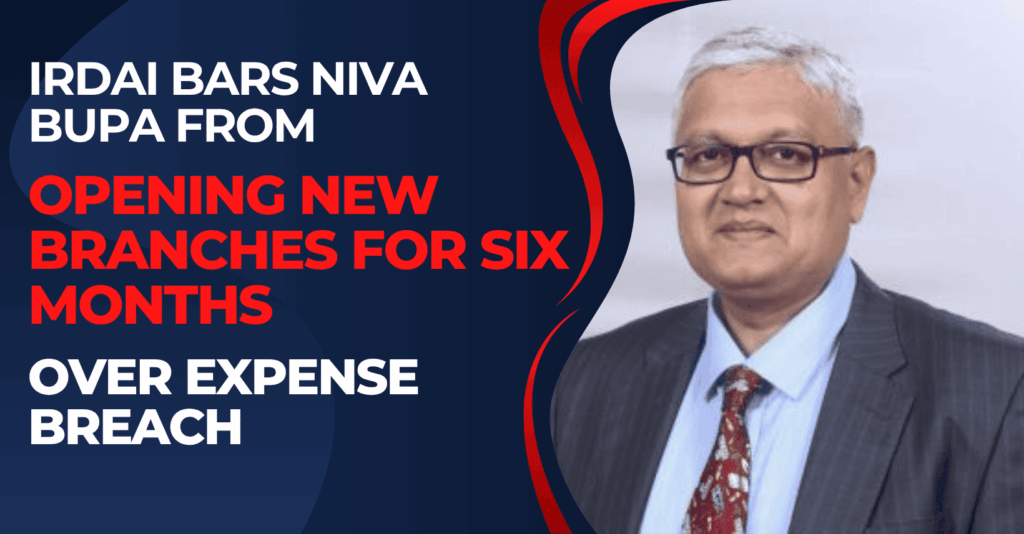
India’s insurance regulator has taken a firm stand against one of the country’s biggest standalone health insurers. On August 19, 2026, the Insurance Regulatory and Development Authority of India (IRDAI) barred Niva Bupa Health Insurance Company from opening any new place of business for six months. The move follows a breach of the insurer’s permitted Expenses of Management (EoM) limits during FY2024-25, and the IRDAI Niva Bupa order includes a formal warning alongside the branch freeze making it one of the sharper regulatory actions taken against a listed health insurer this year.
Niva Bupa disclosed the development in a filing to stock exchanges, noting that IRDAI had earlier sought an explanation on its FY25 EoM numbers, and that the company had already submitted its response before the order was passed.
What Triggered the Niva Bupa Expense Breach
Under the IRDAI (Expenses of Management, including Commission of Insurers) Regulations, 2024, health insurers cannot let their operating costs and commission payouts exceed 35% of gross written premium in a financial year. Based on its review of Niva Bupa’s revised EoM return for FY25, IRDAI found that the insurer’s actual expenses exceeded the allowable ceiling by close to Rs 248.37 crore a gap wide enough to prompt both a warning and a temporary expansion freeze, rather than just an advisory note.
Notably, Niva Bupa wasn’t the only insurer flagged that day. IRDAI issued a comparable order against Acko General Insurance for an EoM overshoot of roughly Rs 334.78 crore, which suggests the regulator is tightening expense discipline across the industry rather than singling out one company.
Core Details of the Regulatory Action
- Restriction: No new branch offices or places of business anywhere in India
- Effective from: August 19, 2026
- Duration: Six months
- Underlying cause: FY25 EoM breach of approximately Rs 248.37 crore
- Existing branches: Fully operational; claims, renewals, and customer service continue without interruption
How Niva Bupa Has Responded to the IRDAI Niva Bupa Order
Company management has been quick to stress that this Niva Bupa IRDAI order looks backward at FY25 performance rather than reflecting where the business stands today. In its exchange filing, the insurer said it stayed within EoM limits through the whole of FY2025-26 and remained compliant in the June quarter of FY2026-27, and expects to hold that position for the rest of the current financial year. The company added that it is evaluating the order in detail and will take appropriate steps to protect the interests of its stakeholders.
Market Reaction: The Niva Bupa Branch Expansion Ban and Investor Sentiment

The news did rattle investors, if only briefly. Niva Bupa shares slipped through the trading session and closed about 1.3% lower on the day the order became public. Market analysts have largely read the Niva Bupa branch expansion ban as a short-term hurdle for physical network growth rather than a threat to the company’s underlying business, pointing to healthy underwriting momentum and rising health insurance penetration in smaller towns and cities.
Why IRDAI Enforces EoM Caps in the First Place
Expenses of Management caps exist for a fairly simple reason: to stop insurers from spending their way to growth at the cost of policyholder security. When operating costs, commissions and overheads run unchecked, two things tend to happen capital that should back solvency and claims gets stretched thin, and insurers start competing on aggressive spending rather than product quality or service.
When a company breaches these limits, IRDAI typically responds in stages, moving from cautionary notices to formal warnings to restrictions such as this branch expansion freeze. The broader message behind this IRDAI compliance directive is meant for the whole industry: scaling up distribution and customer acquisition cannot come at the expense of financial discipline.
What This Means for Policyholders
If you’re already insured with Niva Bupa, or considering a policy, very little changes for you day to day.
- Claims: Cashless approvals and reimbursements continue exactly as before
- Renewals: Existing policies stay valid and renewable, online or offline
- New purchases: Still possible through existing branches, agents, corporate partners and digital channels only the opening of new physical offices is paused
Key Facts at a Glance
The table below summarises the IRDAI Niva Bupa order and its practical implications.
Detail | Figure / Status |
Order date | August 19, 2026 |
Regulator | Insurance Regulatory and Development Authority of India (IRDAI) |
Insurer | Niva Bupa Health Insurance Company Ltd |
Restriction | No new places of business for 6 months |
Regulation breached | IRDAI (Expenses of Management, including Commission of Insurers) Regulations, 2024 |
Statutory EoM cap (health insurers) | 35% of gross written premium |
FY25 EoM breach amount | ≈ Rs 248.37 crore over the permitted limit |
FY26 compliance status | Fully compliant (as stated by the company) |
Q1 FY27 compliance status | Fully compliant (as stated by the company) |
Stock reaction | Closed ≈ 1.3% lower on the day the order was disclosed |
Impact on existing customers | No claims, renewals and service continue as usual |
Comparable industry action | Acko General Insurance received a similar order the same day (≈ Rs 334.78 crore EoM breach) |
Frequently Asked Questions (FAQs)
1. Why did IRDAI bar Niva Bupa from opening new branches?
IRDAI found that Niva Bupa exceeded its permitted Expenses of Management limits by close to Rs 248.37 crore in FY2024-25, prompting a formal warning and a six-month freeze on new branch openings.
2. What exactly does the Niva Bupa branch expansion ban cover?
The insurer cannot open any new branch offices, regional hubs or places of business anywhere in India for six months from August 19, 2026.
3. How has Niva Bupa responded to the IRDAI order?
The company says the breach relates only to FY25 and that it has stayed compliant through FY26 and the first quarter of FY27. It is reviewing the order and says it will act in the interest of stakeholders.
4. What is an IRDAI compliance directive on Expenses of Management?
It’s a binding regulatory action taken when an insurer’s operating costs and commission payouts exceed the limits set under the IRDAI (Expenses of Management, including Commission of Insurers) Regulations, 2024 in this case, capped at 35% of gross written premium for health insurers.
5. Can new customers still buy a Niva Bupa health policy?
Yes. New policies remain available through existing branches, agents, corporate tie-ups and digital platforms. Only new office openings are on hold for six months.