

How AceVector Built the Business Behind Snapdeal and Grew Its E-Commerce Platform
- Blog Industry Technology Trending News
- Entrepreneurs Story News
- September 22, 2026
- 142
- 14 minutes read
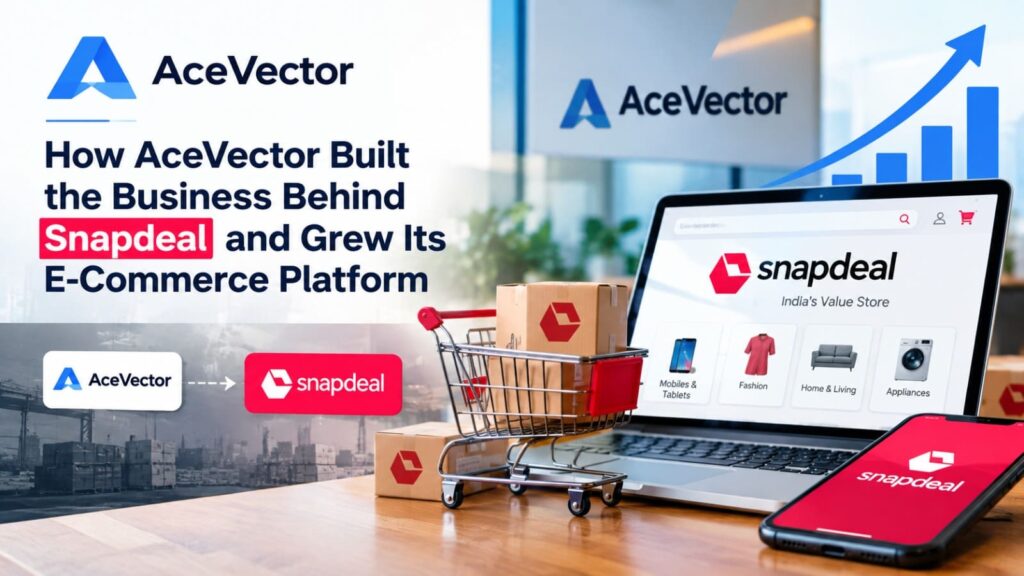
India’s e-commerce story usually gets told through Flipkart and Amazon. Less discussed is Snapdeal’s second act how a marketplace that once burned through hundreds of millions of dollars chasing metro shoppers turned itself into a profitable, tightly run business by walking away from that fight entirely. The company behind that turnaround, AceVector, has quietly become one of the more interesting structural experiments in Indian e-commerce.
AceVector is the Gurugram-based holding company founded by Kunal Bahl and Rohit Bansal, Snapdeal’s co-founders. Understanding how AceVector built the business behind Snapdeal means looking past the marketplace itself: the group now sits above three businesses Snapdeal, the SaaS platform Unicommerce, and the D2C label group Stellaro Brands and each one supports the others in ways that aren’t obvious from the outside.
Company Background: Founders' Pivots
This venture is the money-making machine of Snapdeal founders Kunal Bahl and Rohit Bansal. The company was launched in 2010 as an offline coupon and daily deals destination but quickly realized that the real value would be in providing a full e-commerce marketplace.
- 2010: Launched as a site to find daily deals & coupons.
- 2011: Launch of the full B2C physical goods marketplace following the daily deals listing.
- 2014-2016: Raised a lot of global institutional capital and aggressively moved into payment systems, technology, and logistics.
- 2017 (Snapdeal 2.0): A strategic pivot to cash-flow positivity, unit economics, and value-conscious shoppers in non-metro markets via divestment of non-core businesses.
- 2022 (AceVector Group): Brought Snapdeal, Unicommerce (e-commerce SaaS), and Stellaro Brands (D2C house labels) under one roof.
What Snapdeal 2.0 Actually Changed
The Snapdeal 2.0 pivot wasn’t just cost-cutting it was a bet that Indian e-commerce didn’t have to mean chasing gross merchandise value in Delhi and Mumbai. Management focused instead on daily-use, unbranded goods for buyers who cared more about price than brand or 10-minute delivery. It worked: Snapdeal has been operationally profitable for several years, and as of late 2025, more than 80% of its orders are priced under ₹599 a clear signal of exactly who it’s now built for.
Leadership has shifted too. Achint Setia took over as Snapdeal’s CEO in early 2025, while longtime CEO Himanshu Chakrawarti moved to lead Stellaro Brands full-time.
Four Engines Behind the Group
AceVector’s model isn’t a single revenue stream it’s a B2B software business feeding a B2C market, with a consumer brands arm layered on top:
- Value-first cataloguing: unbranded lifestyle, home and regional fashion products aimed squarely at price-conscious buyers.
- SaaS monetisation: licensing Unicommerce’s software to thousands of independent retail brands for recurring, high-margin revenue.
- Hyperlocal merchant onboarding: bringing small manufacturers and regional sellers into national shipping networks without heavy capital outlay.
- House-brand incubation: filling gaps in the marketplace catalogue through Stellaro Brands’ in-house labels.
Unicommerce: The Technology Backbone to Scale
Unicommerce deserves its own mention, because the story here has moved on from what most write-ups say. It’s often described as AceVector’s internal technology backbone and it still functions that way, powering order fulfilment, multi-channel inventory and warehouse management for retailers and marketplace sellers. But Unicommerce has been a separately listed public company since its IPO in August 2024, which was oversubscribed more than 160 times.
AceVector remains its largest shareholder, but no longer its sole owner a distinction worth making, since consumer marketplaces are seasonal and cyclical, while Unicommerce’s subscription revenue gives the group a steadier, higher-margin income stream sitting alongside it.
Standalone Retailer vs. Integrated Ecosystem
Dimension | Standalone E-Commerce Retailer | AceVector’s Integrated Model |
Primary revenue | Marketplace commissions and listing fees | SaaS subscriptions, marketplace take-rates, brand sales |
Target audience | Metro, brand-conscious shoppers | Value-conscious shoppers in Tier 2+ towns |
Merchant tools | Basic order dashboard, external tools | Native SaaS integration via Unicommerce |
Capital use | High spend on owned fulfilment centres | Lean, asset-light, shared logistics |
Product focus | Branded electronics, premium fashion | Value lifestyle goods, affordable home products |
Focus on 'Bharat': The Tier 2+ Market
The clearest strategic choice AceVector made was to stop competing for the same metro customer everyone else wanted, and instead build for “Bharat” the buyers in India’s Tier 2, Tier 3 and Tier 4 towns who care more about affordability, utility, and cash-on-delivery than same-day shipping.
Simple regional shipping integrations and mobile-first seller tools have let thousands of small manufacturers people who make in-demand goods but lack digital distribution skills reach customers directly. It’s a catalogue of unbranded, value merchandise that premium-focused retailers were never built to compete with.

What's Next
Two developments are worth watching, and both extend the same story of how AceVector built the business behind Snapdeal into something bigger than one marketplace. AceVector itself filed confidential draft IPO papers with SEBI in mid-2025 and received regulatory approval that November, putting the group on a path to a public listing of its own.
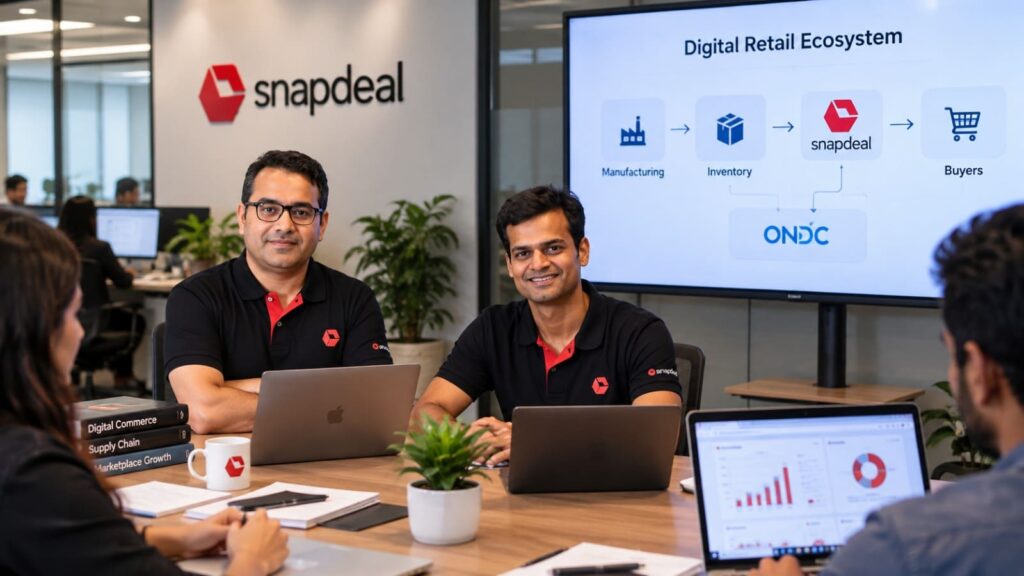
And Snapdeal has said it plans to integrate more closely with the Open Network for Digital Commerce (ONDC), the government-backed initiative meant to make Indian e-commerce more interoperable — a move that could open the marketplace to a much larger pool of small sellers and buyers over time.
Frequently Asked Questions (FAQ’s)
What is the relationship between AceVector and Snapdeal?
AceVector is the parent company of Snapdeal, and the largest shareholder in Unicommerce and Stellaro Brands.
When was the company founded, and by whom?
Snapdeal was founded in 2010 by Kunal Bahl and Rohit Bansal, initially as a daily-deals and coupons platform.
Why does Snapdeal appeal to value-conscious shoppers?
It’s built around affordable fashion, home and lifestyle products for buyers in Tier 2+ towns, with most orders priced well under ₹600.
Which businesses sit under AceVector?
Snapdeal (the B2C marketplace), Unicommerce (listed e-commerce SaaS), and Stellaro Brands (D2C house labels).