

Generative Engine Optimization (GEO): How to Optimize Content for AI Overviews and Answers
- Blog Industry Trending News
- Entrepreneurs Story News
- October 7, 2026
- 22
- 16 minutes read
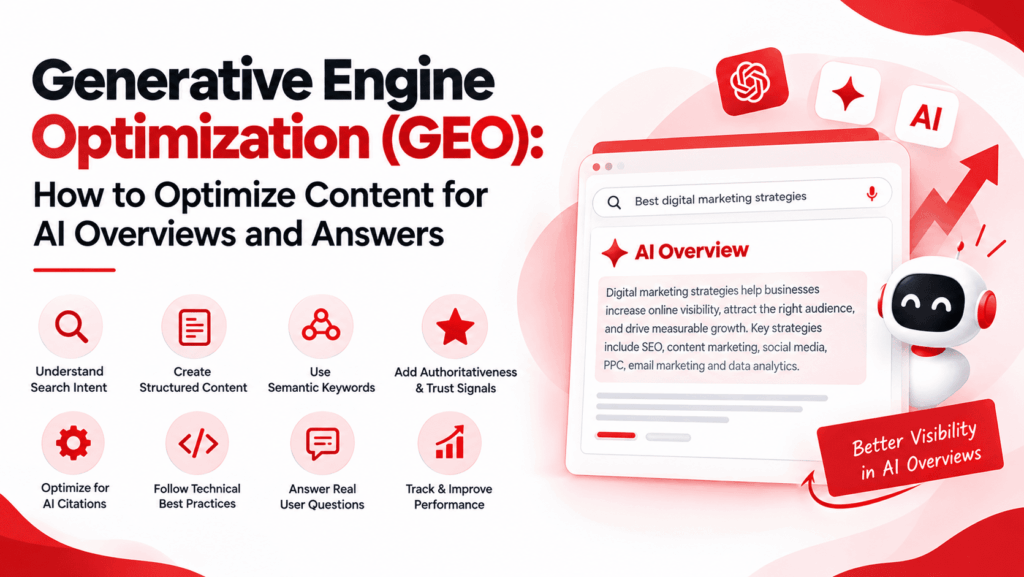
Search is changing faster than most marketing teams can keep up with. As the major engines fold large language models directly into the results page, a growing share of queries never produce a list of blue links at all they produce an answer, synthesized on the spot, with your competitors’ content (or yours) quietly feeding it.
That shift is what people mean by Generative Engine Optimization, or GEO.
If organic traffic still drives meaningful pipeline for your business, this isn’t a trend you can watch from the sidelines. Optimizing content for generative search has moved from “worth experimenting with” to “necessary for staying visible” as this technology reshapes how people find information.
This guide walks through what’s actually changed, how to build content that AI systems want to cite, and how to tell whether any of it is working
How Search Itself Has Changed
For roughly twenty years, the goal of SEO was simple enough to state in one sentence: earn a spot near the top of the results page and get the click.
That’s no longer where the competition ends. Increasingly, the real prize is being the source an AI answer cites sometimes without the user ever clicking through to your site at all.
That’s the heart of the GEO vs. traditional SEO differences people keep asking about:
- Traditional SEO: built around link discovery and driving traffic to a page.
- GEO: built around being useful enough, in context, that an AI system lifts your answer directly into its response.
The two aren’t opposites, but they reward different things: one wants you to rank, the other wants you to be quotable. Generative engines don’t just match keywords; they read, synthesize, and summarize.
A page that’s merely “findable” under the old rules isn’t automatically citable under the new ones. Getting cited now depends on how clearly your content states an answer, not just whether it contains the right terms.
Building a Strategy That Actually Works
A solid Generative Engine Optimization strategy starts with how you research topics in the first place. Short-tail keywords like “enterprise software” tell you almost nothing about what someone actually wants to know.
The more useful exercise is “prompt research” thinking through the full, conversational questions people type into a chatbot, like “What are the most secure enterprise software options for a financial institution moving to the cloud?”
Authority matters more here, not less. AI models are trained to favor sources that reduce the risk of getting something wrong, which is exactly why these signals keep coming up in every serious AI Overviews optimization guide:
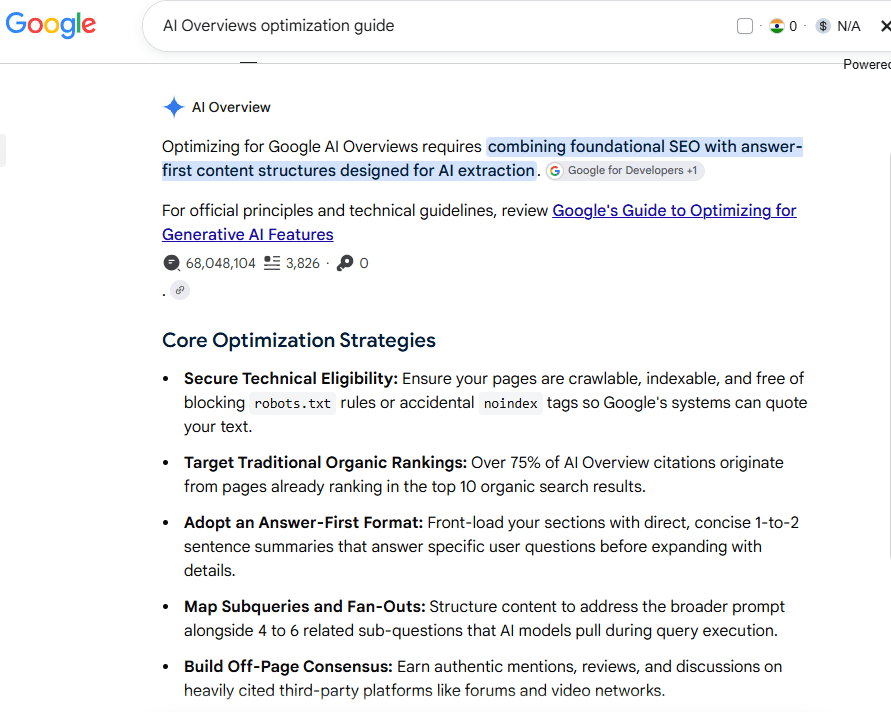
- Proprietary data: original research or figures competitors can’t just copy.
- Direct quotes: from real subject-matter experts, not generic paraphrasing.
- Primary research: references that AI models can treat as a trustworthy source.
Done well, a Generative Engine Optimization strategy turns your content into the underlying fact an LLM pulls from not just another page competing for the same keyword.
Earning a Spot in AI Answers
When leadership asks how to rank in Google AI Overviews, the honest answer is that it comes down to clarity. Google’s AI features are built to surface the most helpful, well-structured information available, which means your writing needs to get to the point fast.
The “inverted pyramid” lead with a direct, factual answer, then layer in supporting detail isn’t just good journalism practice; it’s exactly the shape an AI parser is looking for.
The other half of how to rank in Google AI Overviews is technical, not editorial. Generative features still sit on top of the same indexing infrastructure search has always used. That means:
- Core Web Vitals: page speed and stability still matter, arguably more than ever.
- Clean internal linking: helps crawlers and AI systems understand how your content connects.
- Proper schema markup: Article, FAQ Page, and Organization schema give models structured context.
Without a technically sound foundation, even well-written content can’t surface in a generative overview, no matter how well it’s written.
Formatting Content for Machine Extraction
Optimizing content for generative search means writing with extraction in mind, not just readability. Clever, vague headers might look good in a style guide, but they don’t help an AI system understand what a section answers.
What works instead:
- Question-based H2s and H3s: signal exactly what a section answers.
- Bulleted lists and numbered steps: give models something they can lift cleanly.
- Data tables: structure comparative information in a format AI parsers favor over dense prose.
Keyword stuffing works against you here. Models trained on natural language are tuned to notice it, and it actively hurts your odds of being cited rather than helping.
The better approach is short paragraphs (two to three sentences is a good target), precise language, and formatting that a reader or a model can scan in seconds.
Do that consistently, and an engine is far more likely to lift your point cleanly and attach a citation back to your domain.
Measuring Something That Doesn't Look Like a Ranking
Reporting on ROI for any of this is genuinely hard right now. There’s no clean equivalent of “ranking position” for an AI citation; answers are generated dynamically, shaped by a user’s own history and the exact phrasing of their prompt, so the same question can surface different sources for different people.
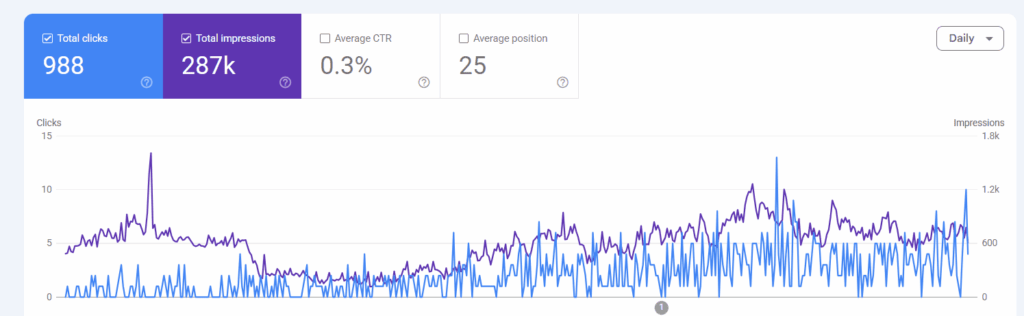
Standard analytics tools haven’t fully caught up, so most teams end up tracking a handful of AI search visibility metrics as proxies instead:
- Brand mentions: showing up inside AI-generated answers.
- Long-tail query growth: tracked inside Google Search Console.
- Featured snippet movement: still tends to correlate with GEO performance.
None of these AI search visibility metrics are perfect on their own, but tracked together over time, they give you a reasonable read on whether your content is actually bridging the gap between old-style indexing and the newer, conversational way people are finding information.
Where This Leaves You
Generative AI isn’t going to slow down, and neither is the shift in how people find information. Getting ahead of it means rethinking content structure, strengthening your authority signals, and writing for the way people actually ask questions now not just the way they used to type them into a search box.
Teams that make that adjustment now will spend a lot less time scrambling to catch up later.
Frequently Asked Questions (FAQ's)
1. What is Generative Engine Optimization?
Generative Engine Optimization is the practice of writing and structuring content so AI-powered search tools ChatGPT, Perplexity, Google’s AI summaries, and similar systems can easily understand it, extract it, and cite it in their answers.
2. What are the main GEO vs traditional SEO differences?
The core difference comes down to the end goal. Traditional SEO aims to rank a page as a clickable link that drives traffic; GEO aims to get your content synthesized and cited directly inside an AI-generated response, click or no click.
3. What are the core pillars of a Generative Engine Optimization strategy?
A working strategy rests on conversational prompt research, visually structured content like tables and bulleted lists, strong E-E-A-T signals, and a technically sound site that AI crawlers can actually parse without friction.
4. Is there a guaranteed method for how to rank in Google AI Overviews?
No method is guaranteed in search, but the strongest approach combines direct, inverted-pyramid answers, disciplined schema markup, and real topical authority built on expert quotes and original data rather than recycled claims.
5. Why is optimizing content for generative search so crucial for B2B brands?
Enterprise buyers increasingly use AI tools to research vendors before ever visiting a website. If your content is the one an AI cites during that research, you’re building trust and capturing high-intent prospects earlier than a traditional search listing ever could.