


Polymer vs. Paper Currency: Government Approves Pilot Testing for Rs 10 and Rs 20 Denominations
- Blog Finance Industry New Technology Trending News
- Entrepreneurs Story News
- August 12, 2026
- 638
- 18 minutes read
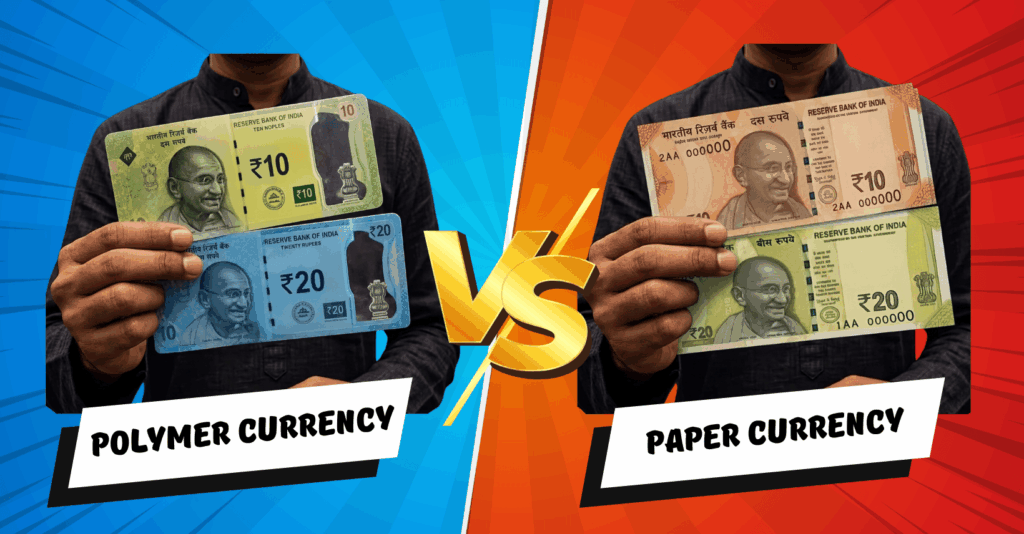
The government has given the Reserve Bank of India the green light to start field trials for polymer versions of the ₹10 and ₹20 note. It’s not a small pilot, either the RBI plans to test one billion pieces of each denomination, according to Minister of State for Finance Pankaj Chaudhary, who confirmed the approval in a written reply to the Lok Sabha.
It’s the latest chapter in a debate India has circled back to more than once over the past decade or so: whether the country’s lowest-value notes, which get passed from hand to hand more than any other denomination, would hold up better if they were made of plastic instead of cotton-paper.
Why Paper Might Not Be Cutting It Anymore
India has printed its currency on cotton-paper substrate for as long as most people can remember. But that material has a real weakness: it wears out fast, especially at the lower denominations that circulate constantly in everyday retail transactions bus fares, chai stalls, small change at the market. Torn, soiled, and taped-together notes are a familiar hassle, and replacing them at scale isn’t cheap.
The shift toward polymer is being run by Bharatiya Reserve Bank Note Mudran Pvt. Ltd. (BRBNMPL), the RBI’s currency-printing arm, which has begun the process of sourcing polymer substrate built with modern security features. The trial is designed to test how well the material actually holds up across India’s very different climates from humid coastal cities to the cold, dry mountain regions rather than assuming lab conditions will translate to daily use.
Polymer vs. Paper: What's Actually Being Weighed
Durability
This is the main argument for switching. International studies the RBI has cited, along with its own internal assessments, show polymer notes hold up meaningfully longer than paper ones. Lower-denomination notes see the most wear because they change hands so often, so a more durable substrate there means fewer reprints and lower distribution costs over time.
Security
Counterfeiting is a persistent problem for any central bank, and polymer substrate makes it easier to build in features that are genuinely hard to fake transparent windows, complex holograms, colour-shifting ink. These aren’t just cosmetic; they’re a real upgrade in how difficult a note is to reproduce convincingly.
Cost and Environmental Impact
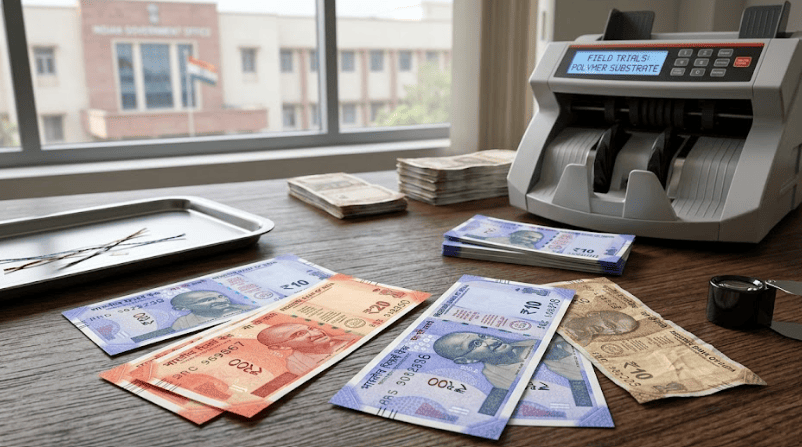
Polymer notes cost a bit more to produce upfront, but because they last so much longer, the total cost of keeping them in circulation tends to work out lower. At the end of their life, polymer notes can also be recycled into other plastic products, which is a cleaner disposal path than the energy-intensive shredding and briquetting that worn-out paper notes go through.
Paper vs. Polymer: A Side-by-Side Comparison
Put next to each other, the practical differences between the two substrates are fairly stark which is exactly why the RBI is running a large-scale field trial rather than taking the durability argument on faith:
Specification | Paper Currency | Polymer Currency |
Base material | Cotton-fibre paper substrate | Biaxially oriented polypropylene (BOPP) a specially engineered plastic substrate |
Average lifespan (low denominations) | Under 1 year in high-circulation use, per RBI and international central-bank data | Roughly 2.5 to 4 times longer than paper; up to 5+ years in comparable low-denomination use abroad |
Moisture, dirt and sweat resistance | Absorbs moisture and soiling; degrades and tears with regular handling | Does not absorb moisture, sweat or dirt; stays visibly cleaner for longer |
Security features | Watermark, security thread, intaglio (raised) printing | All standard features, plus transparent windows, colour-shifting ink and complex holograms that are much harder to replicate |
Feel and texture | Familiar, matte, paper-like texture | Smoother, slightly slippery texture; takes some adjustment for handlers used to paper |
Heat tolerance | Generally stable across everyday temperature ranges | Can soften or deform under prolonged exposure to very high heat |
Production cost (per note) | Lower upfront printing cost | Roughly 30–60% higher upfront production cost than paper |
Total cost of ownership | Higher over time, due to frequent reprinting and replacement | Lower over time, since fewer notes need to be reprinted and redistributed |
End-of-life disposal | Shredded and briquetted an energy-intensive process | Recyclable into other plastic products, but requires specialised recycling facilities |
Current status in India | Standard substrate for all denominations today | Limited to the ongoing ₹10 and ₹20 field trial not yet in general circulation |
A few of these figures are worth unpacking. In Australia, the Reserve Bank has found that low-value paper notes lasted under a year in circulation, while their polymer replacements lasted five years or more and Canada saw average banknote life roughly quadruple after its own switch. The UK saw its £5 note’s lifespan jump from under two years to nearly five once it moved to polymer. That’s the kind of gap the RBI is hoping to replicate with the ₹10 and ₹20 trial, though how it plays out under Indian conditions monsoon humidity, extreme heat in parts of the country, high-volume handling in dense urban markets is precisely what the field trial is meant to establish.
How the Trial Will Actually Work
Testing a billion pieces of each denomination isn’t just for show it’s a large enough sample to get a real read on how people handle the notes day to day, how well they work in ATMs, and how smoothly they move through cash-sorting machines at bank branches. That’s the kind of operational detail that’s easy to miss in smaller pilot runs.
Importantly, this isn’t a step toward retiring paper currency. The Ministry of Finance has been explicit that there’s no proposal to replace paper notes with polymer ones the two will circulate side by side. Whether polymer notes move beyond this trial into regular, wider issuance depends entirely on what the field data shows. RBI Governor Sanjay Malhotra has suggested that, if the trials go well, the notes could start entering circulation around the beginning of FY28, though that timeline isn’t locked in.
India Isn't the First to Try This
Australia was the first country to adopt polymer currency, back in 1988, and Canada and the UK have since made the switch as well. Bringing India into that group would put its physical currency on par with a set of countries that have already worked through the practical kinks of running a plastic-note system at scale.
On the question of what this means for digital payments, the government has been fairly measured rather than making bold promises. Officials have said cash and digital payments are complementary, not competing, systems but they’ve also been clear that the actual impact of polymer notes on digital adoption can only really be assessed once the trials succeed and regular issuance begins. In other words, it’s an open question the government is deferring, not one it’s claiming to have already answered.
The Bottom Line
This is still an early-stage pilot, not a currency overhaul. But if the field trials for the ₹10 and ₹20 polymer notes go well, they could set the template for a more durable, harder-to-counterfeit, and ultimately cheaper-to-maintain cash system one more piece of India’s broader push to modernize its financial infrastructure without abandoning cash altogether.
Frequently Asked Questions (FAQs)
1. What's actually being tested?
The RBI is running field trials on one billion pieces each of polymer ₹10 and ₹20 notes, testing durability, public handling, and how well they work with existing cash-handling infrastructure like ATMs and sorting machines.
2. Will polymer notes replace paper currency?
No. The Ministry of Finance has been explicit there’s no plan to replace paper currency polymer notes, if rolled out, would circulate alongside the existing paper notes.
3. Why start with the ₹10 and ₹20 notes specifically?
These lower denominations circulate the fastest and wear out the quickest, so they’re the best test case for whether polymer’s durability advantage actually holds up in real-world, high-frequency use.
4. What security benefits does polymer offer?
Polymer substrate makes it easier to build in features like transparent windows and complex holograms security elements that are considerably harder for counterfeiters to replicate than standard paper-note features.
5. When might polymer notes actually reach circulation?
There’s no confirmed date yet it depends entirely on how the field trials go. RBI Governor Sanjay Malhotra has pointed to a possible start around FY28 if the trials are successful, but that’s not a locked-in timeline.